Verybusy
Permission architecture, workspace model, and monetization layer for a professional image proofing SaaS: structural work on a live product with an active user base.
Role
Lead Product Designer
Timeline
6 months, 2023–2024
Team
Founders, Product Owner, Scrum Master, Engineers, QA, Designer (me)
 Figma
Figma Figjam
 NotionGitlab
 Slack
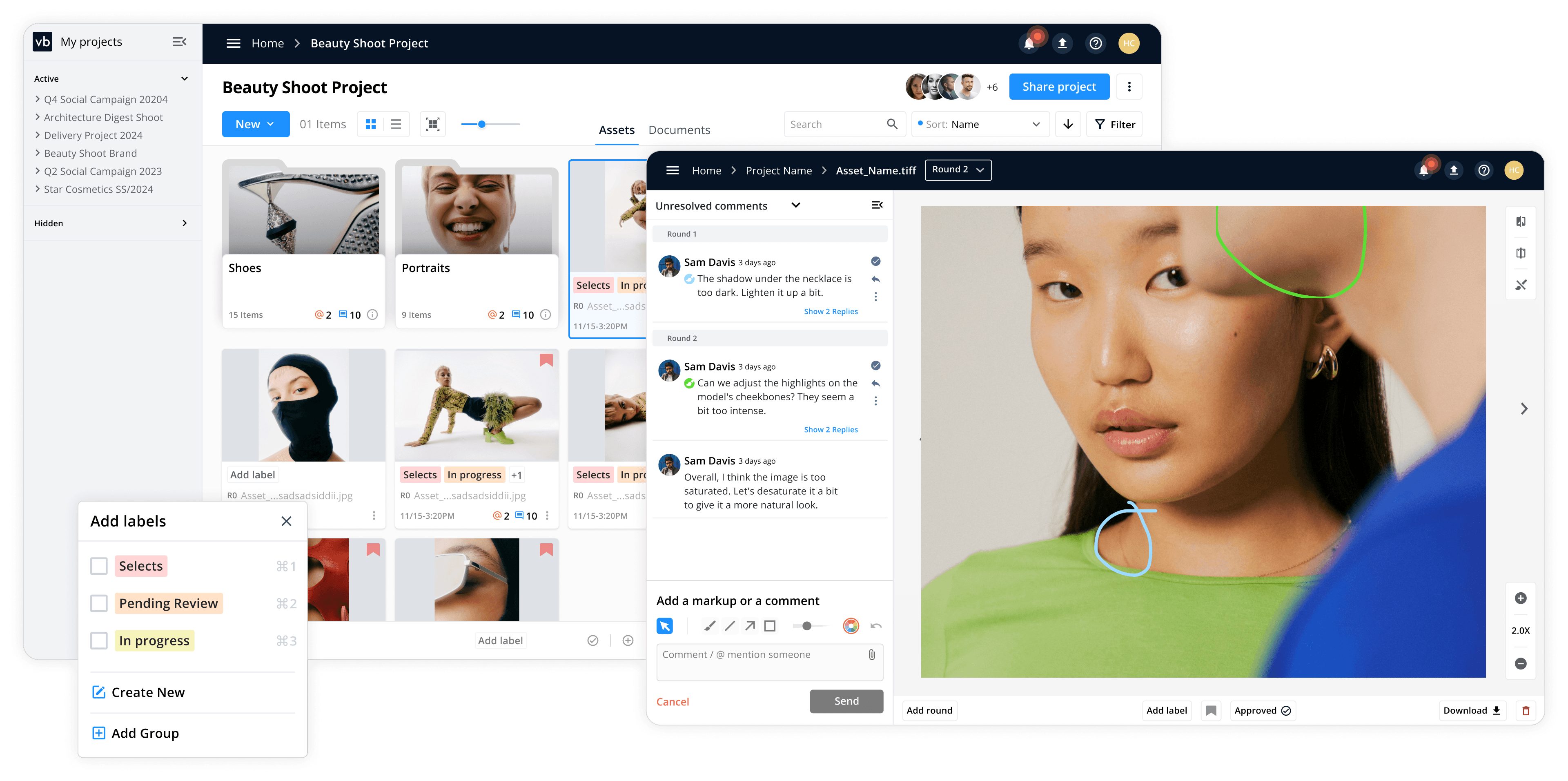
SlackVeryBusy is a professional image proofing platform with an active user base. When I joined, features kept shipping.
What it lacked was the structural layer: a defined collaboration model and an explicit permission system that would make a path to monetization possible.
The product didn't need more features. It needed the rules under which those features operated.
My Role
Permission architecture
Designed the role system from scratch: workspace roles for organizational access and billing, project roles for operational capabilities within each project.
Workspace model
Defined the workspace as the organizational and billing unit, decoupling user identity from plan ownership. Restructured settings around this separation.
Monetization design
Designed upgrade paths, paywalls, and plan selection flows. Defined the gating strategy alongside founders and PO.
Workflow primitives
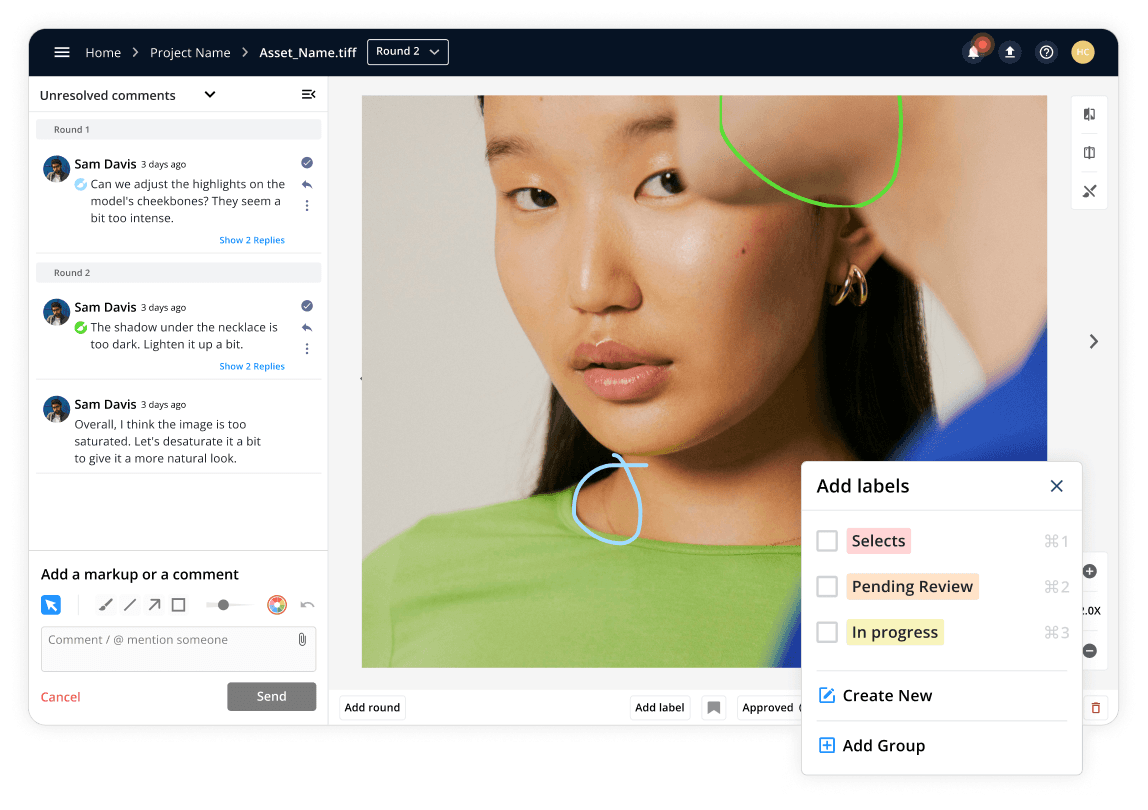
Designed the label system as a configurable building block rather than a fixed workflow: teams define their own review stages with custom labels and reusable presets. Approval is a separate, explicit action.
Handoff architecture
Built components aligned with the codebase: naming conventions, layer hierarchy, and layout logic. Restructured the Figma file and organized design tokens and system styles as shared design-to-code reference.
Permission architecture
Designed the role system from scratch: workspace roles for organizational access and billing, project roles for operational capabilities within each project.
Workspace model
Defined the workspace as the organizational and billing unit, decoupling user identity from plan ownership. Restructured settings around this separation.
Monetization design
Designed upgrade paths, paywalls, and plan selection flows. Defined the gating strategy alongside founders and PO.
Workflow primitives
Designed the label system as a configurable building block rather than a fixed workflow: teams define their own review stages with custom labels and reusable presets. Approval is a separate, explicit action.
Handoff architecture
Built components aligned with the codebase: naming conventions, layer hierarchy, and layout logic. Restructured the Figma file and organized design tokens and system styles as shared design-to-code reference.
The Situation
Retouchers and art directors were using it for real work, but the product was too informal to support professional workflows, and too undefined to charge for. No permission system, no workspace hierarchy, no usage limits.
The Structural Layer
Three decisions that built the foundation for monetization: access control, organizational structure, and usage limits.
Explicit roles over granular permissions
Granular permission models offer flexibility but transfer complexity to users and implementation. For a product where roles map directly to existing workflow actors, making them explicit was the right decision.
Decoupling identity from billing
Verybusy had user accounts but no workspace layer. Introducing workspace as the billing entity was the architectural prerequisite: without it, independent billing relationships per client were impossible to model.
Gating around upgrade triggers
Gates were placed at both usage limits and feature access, designed from one direction: what would move a user on each tier to the next? Not what to restrict, but what creates genuine upgrade pressure at each boundary.
The Proposal
Workspace-level roles and settings
- Four workspace roles with independent capability sets: Owner, Admin, Manager, Member
- One account, independent role per workspace: Owner at one studio, Manager at another
- Settings scoped to the workspace: plan, billing, members, and projects
Project-level roles and access
- Project access assigned by the Manager, whose role was set at workspace level
- All project roles count as workspace members: every invited collaborator consumes a seat
- View-only link for clients: the only seat-free entry, no account required
Monetization layer: gates and upgrade paths
- Two upgrade paths from the same screen: add-ons within the plan, or a full plan change
- Two gating mechanics: gradual friction at usage limits, hard stops at feature boundaries
Shipped to production. Used today by professional imaging teams at brands including Lululemon, Target, and Benefit.
See also
Labor
2026
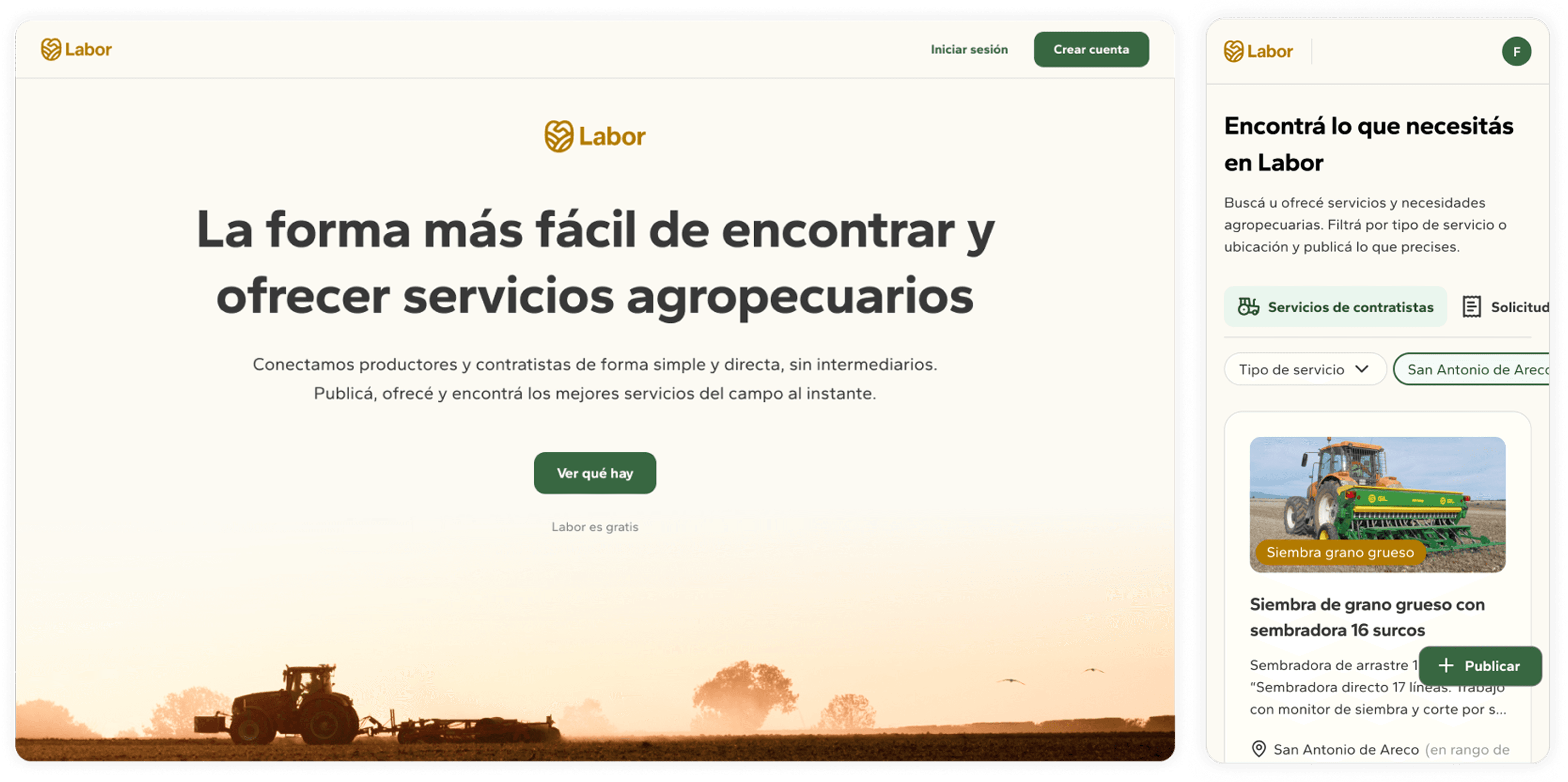
A 0→1 agriculture marketplace shipped to production in 2 months. Built on Next.js, deployed on Vercel with Vercel Blob, Supabase, Clerk auth, and Google Maps.
Viramos
2024 - 2025
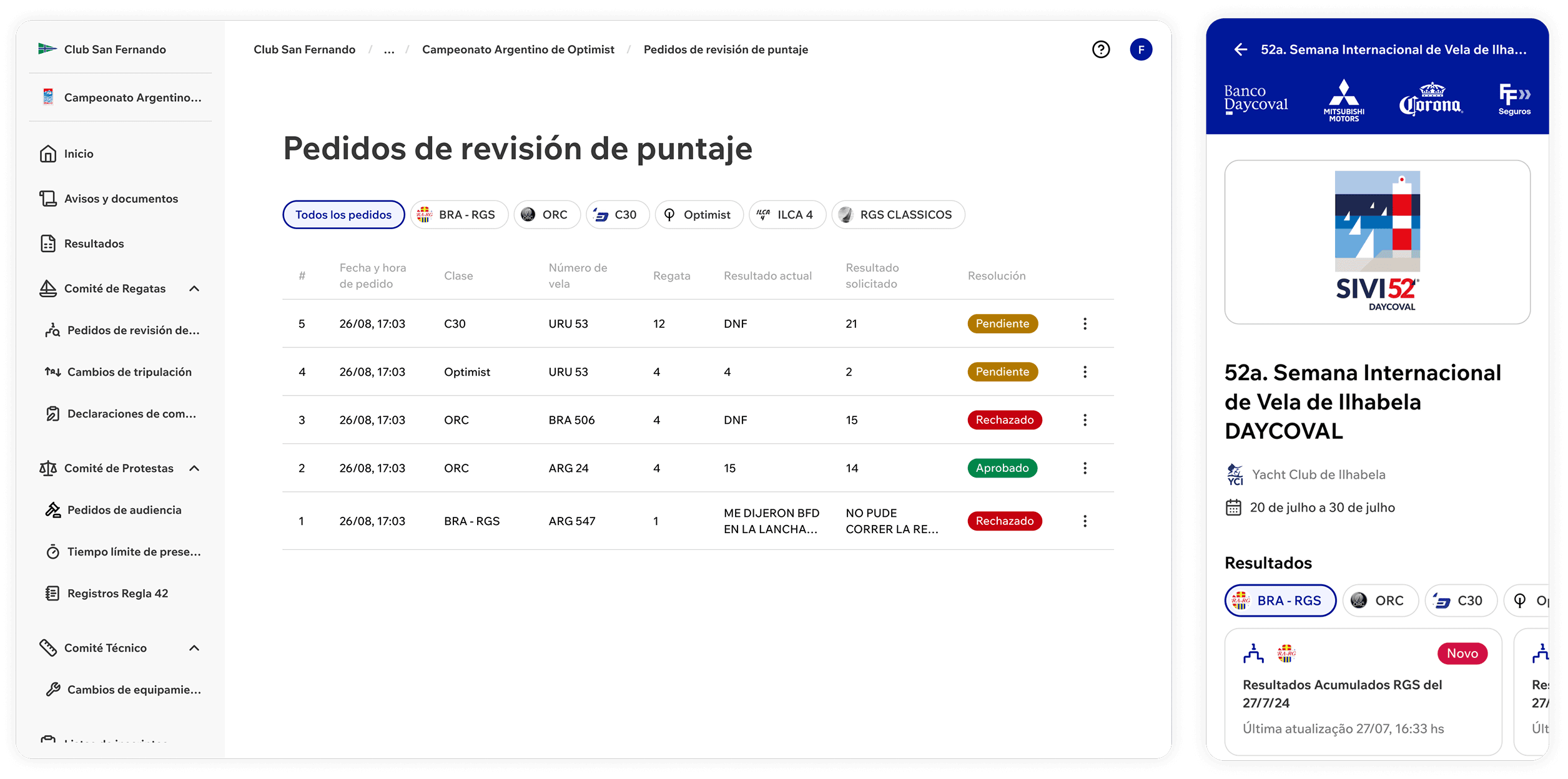
A multi-role operational SaaS — rebuilt from a no-code MVP into a role-based, permission-driven platform serving 5 countries across Latin America.