Theo AI
Rapid product exploration at an early-stage legal AI startup: prompt-engineered research tooling and multi-format design for high-friction enterprise users.
Role
Product Designer
Timeline
4 months, 2025
Team
CEO, CPO, CTO, Legal Advisors, Product Owner, Designer (me), Engineering Team
 Figma
Figma GPT
GPT Gemini
 Notion
 Google Workspace
 Slack
SlackTheo AI is building a litigation intelligence platform. Back then, there was no defined interface, just two open workstreams.
The first, a case discovery tool, took shape as a prompt-based prototype, built to quickly validate a new product direction.
The second, a case prediction product, had to operate within a workflow-rigid, high-friction environment where the question was format, not features.
My Role
Prompt as prototype
Prototyped a case discovery tool as a structured GPT prompt. Designed the criteria, signal filters, and output format required for a decision-maker to act on the results.
Complex data interface design
Turned complex AI predictions into legible, actionable outputs across three delivery formats: a full operational dashboard, a chart-based chat interface, and a structured email digest.
Adoption friction hypothesis
Before designing any format, I framed the core constraint: in a conservative domain, adoption friction would outweigh feature quality. Validated directly in user sessions.
Format as design decision
Tested three delivery formats: platform, chat, and email. The email won not because it was the most capable, but because it arrived where users already were.
Two-layer research
Ran user research sessions alongside the CEO with a group that rarely participates in product research. Two layers: legal advisors for domain context, GC users for unbiased validation.
Prompt as prototype
Prototyped a case discovery tool as a structured GPT prompt. Designed the criteria, signal filters, and output format required for a decision-maker to act on the results.
Complex data interface design
Turned complex AI predictions into legible, actionable outputs across three delivery formats: a full operational dashboard, a chart-based chat interface, and a structured email digest.
Adoption friction hypothesis
Before designing any format, I framed the core constraint: in a conservative domain, adoption friction would outweigh feature quality. Validated directly in user sessions.
Format as design decision
Tested three delivery formats: platform, chat, and email. The email won not because it was the most capable, but because it arrived where users already were.
Two-layer research
Ran user research sessions alongside the CEO with a group that rarely participates in product research. Two layers: legal advisors for domain context, GC users for unbiased validation.
The Context
Theo AI had the technology but an open market direction. The mandate: test fast. In the legal domain, institutional inertia is structural: security reviews, compliance cycles, and IT approvals make tool adoption hard regardless of product quality.
Case discovery tool
Decision architecture over interface design
The product needed to exist before any interface was built, which meant the design work was entirely about structure: what information to surface, what criteria to apply, and what the output needed to contain for someone to act on it.
Case discovery was manual, inconsistent and hard to scale
Litigation funding companies identify cases to finance by manually scanning news, court filings, and law firm publications. The process is inconsistent and hard to scale.
An agent instead of a wireframe
A structured GPT research agent that scanned public sources, filtered results against mandatory criteria, and cross-referenced multiple sources to reduce hallucinations. The output was a structured case brief with enough information for a decision-maker to act on.
The prompt was the product
The challenge was not the interface. It was the decision architecture: what criteria are mandatory vs. optional, what signals indicate funding potential, and what the output needs to contain for someone to make a real investment call.
Case prediction product
Format as the adoption problem
Three delivery formats were prototyped and tested with large in-house legal teams to find which could best integrate high-stakes AI predictions into their existing workflows with the least friction.
Platform: Best on paper, lost to adoption cost.
Generated real interest in testing. Lost not because users didn't see value, but because they couldn't justify adding a new tool to an environment where security reviews, IT approvals, and organizational inertia make adoption genuinely costly.
Chat: Open-ended format, wrong fit.
The open-ended format didn't match the structured, decision-oriented nature of how these users work. A conversational AI assumes exploratory intent; GC work is structured and outcome-driven.
Email digest: No new tool, no behavior change. Won.
No new tool to adopt, no behavior to change, no security review to clear. It arrived where users already were and fit into a workflow they were not willing to break. The most capable format lost to the most adoptable one.
The Findings
Case discovery: The prototype ran, got in front of users, and returned a clear answer: output quality wasn't robust enough to convince.
Case prediction: In a high-friction environment, adoptability outweighs capability. The email won not because it was the best format, but because it was already there.
See also
Labor
2026
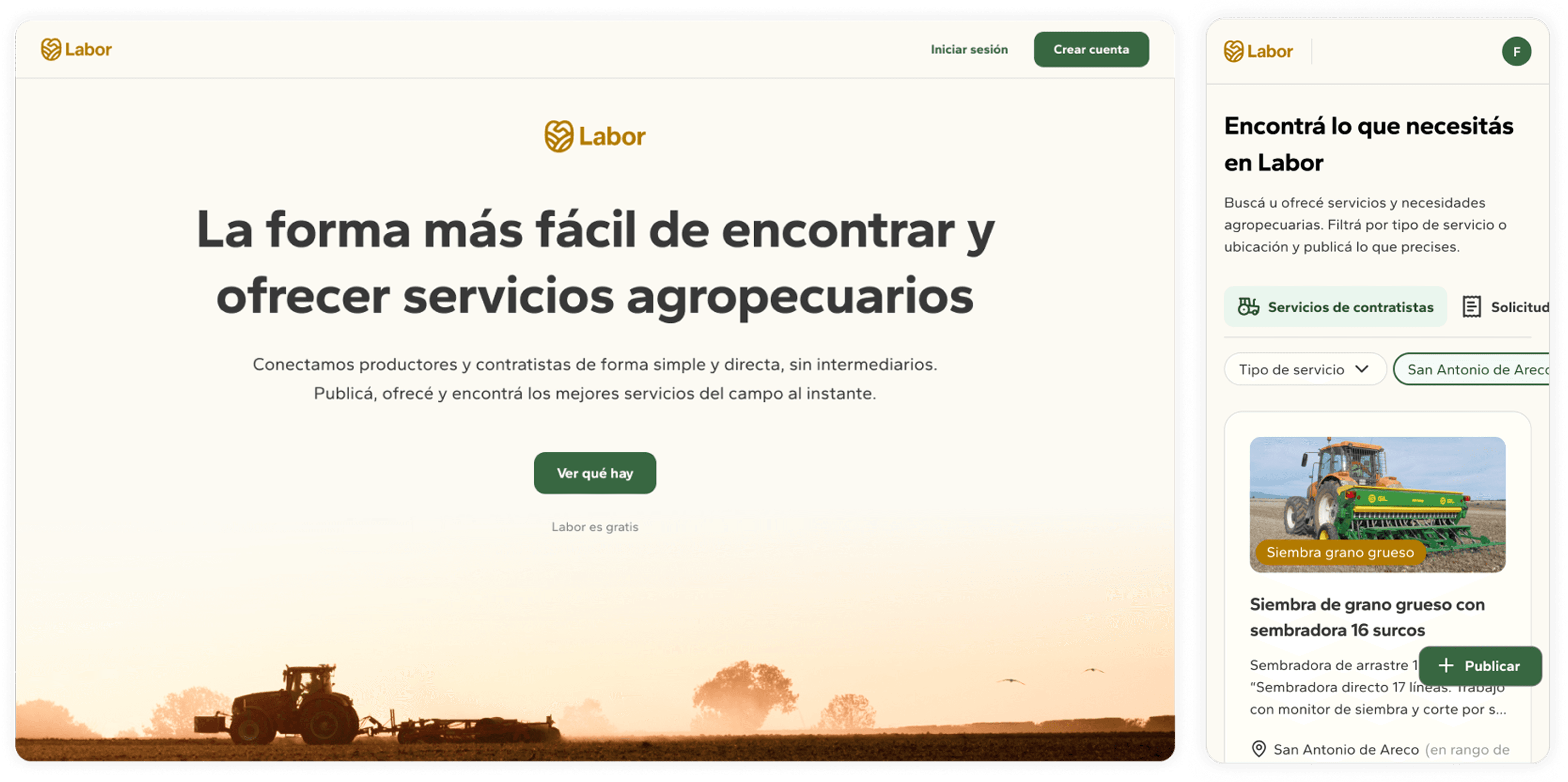
A 0→1 agriculture marketplace shipped to production in 2 months. Built on Next.js, deployed on Vercel with Vercel Blob, Supabase, Clerk auth, and Google Maps.
Verybusy
2023 - 2024
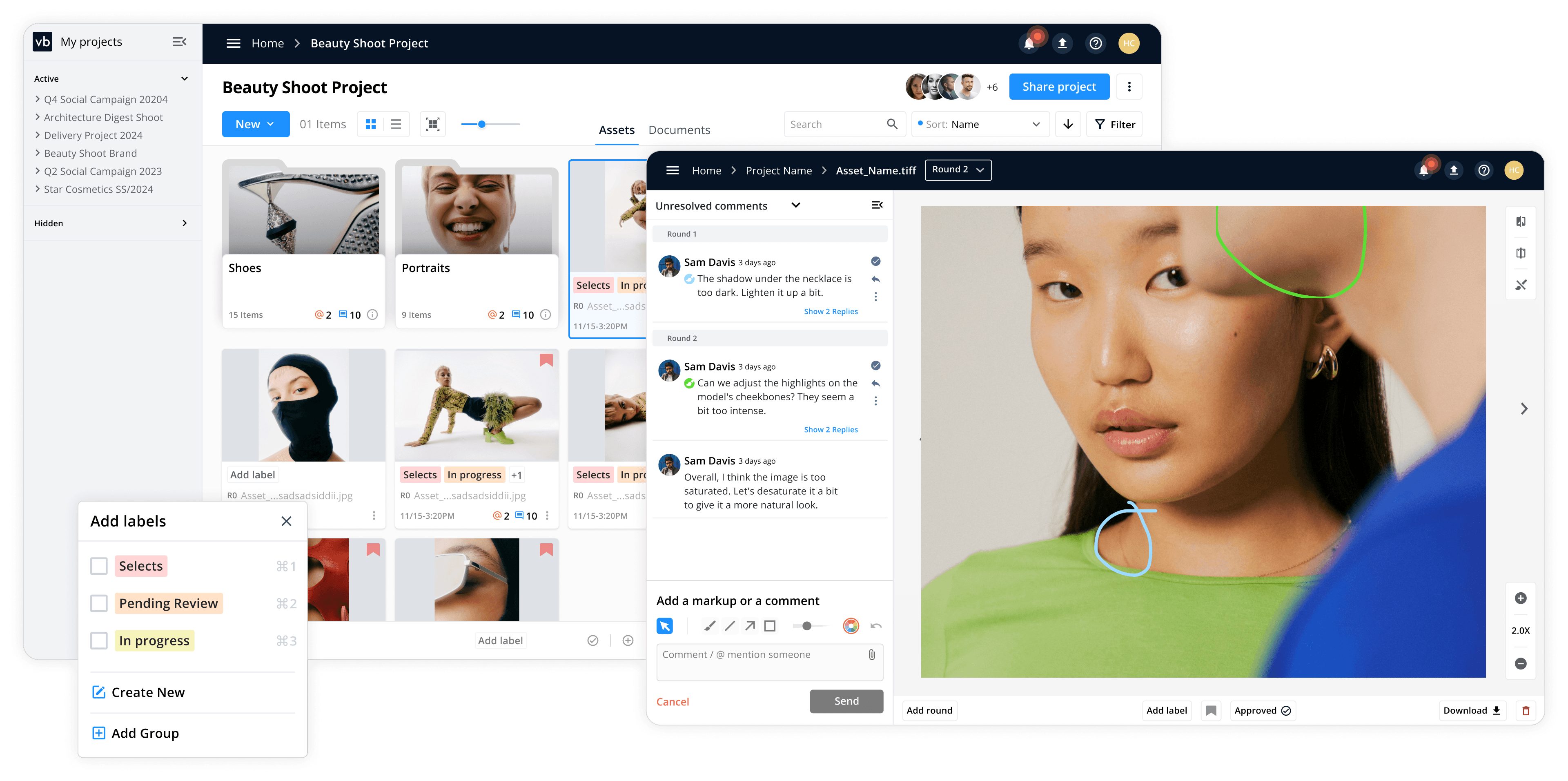
Permission architecture, workspace model, and monetization layer for a professional image proofing SaaS: structural work on a live product with an active user base.